Whole Foods vs. Processed Nutrient Absorption
Evidence-informed exploration of how food processing affects nutrient bioavailability and the physiological impact of food structure.
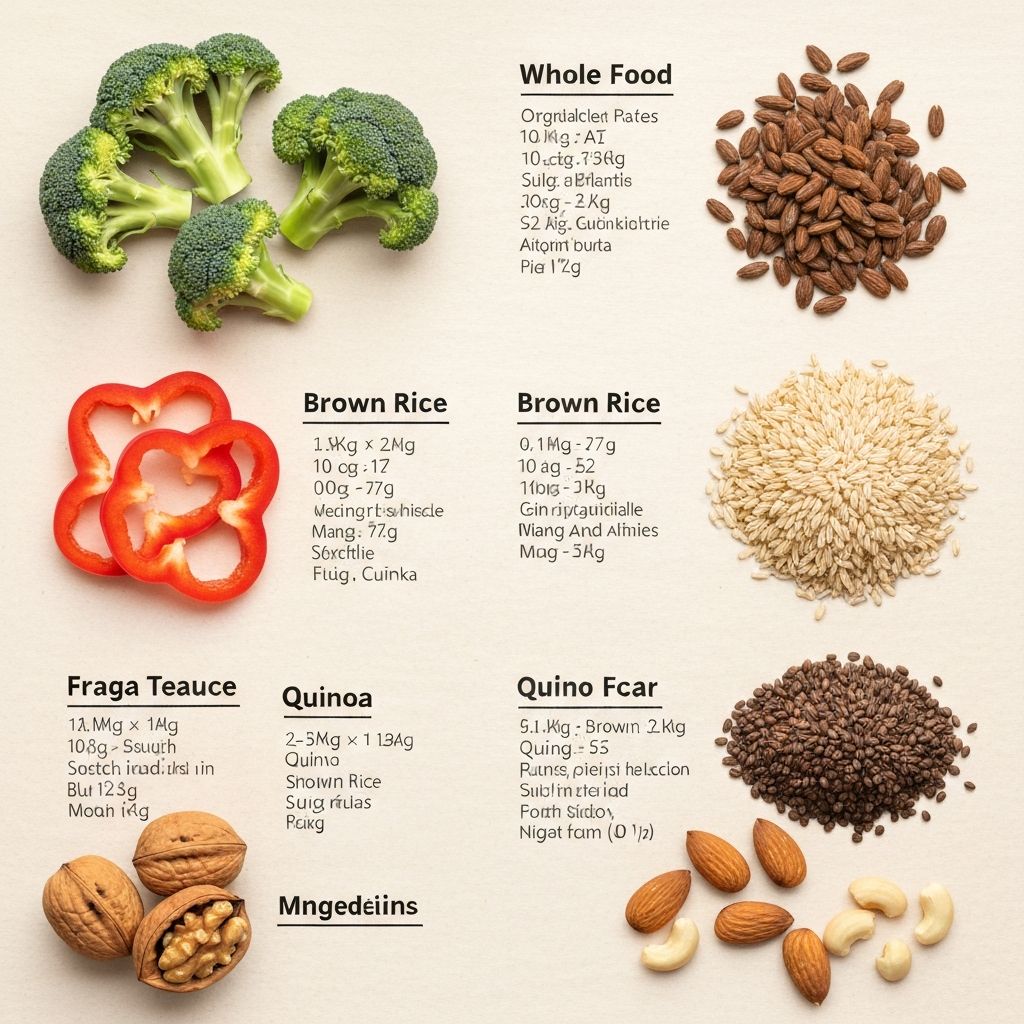
Food Matrix and Nutrient Bioavailability
Nutrients don't exist in isolation within foods—they exist within complex food matrices comprising cell walls, proteins, fats, carbohydrates, and water. This structure profoundly affects nutrient bioavailability—the degree to which the body can absorb and utilise nutrients.
Whole Grains vs. Refined Grains
Whole grains retain the bran, germ, and endosperm. Refined grains remove the bran and germ, leaving primarily starch. This structural difference affects digestion speed, nutrient content, and metabolic response.
Whole grains digest more slowly, releasing glucose gradually. They retain fibre, B vitamins, minerals, and phytonutrients lost in refinement. The slower glucose absorption pattern affects hormonal response, satiety, and energy stability compared to refined grain products.
Cellular Structure Effects
Plant cells are encased in cellulose walls. When foods remain intact, these cell walls physically slow nutrient release during digestion. Processing—grinding, heating, or extraction—disrupts cell structure, making nutrients more readily available but changing the physiological impact.
For example, whole apple consumption versus apple juice consumption: the fibre and cell structure of the whole apple slow glucose absorption dramatically compared to juice, where cell walls are already broken and fibre is often removed.
Mineral and Phytochemical Retention
Processing often removes micronutrients and phytochemicals concentrated in outer layers or specific plant parts. Peeling vegetables removes nutrient-rich skin. Extracting juice removes fibre and concentrates sugars. Refining grains removes mineral-rich bran.
Whole foods inherently contain nutrient combinations—minerals paired with fibre, vitamins with phytonutrients—that processed foods often lack or recombine artificially.
Bioavailability Factors
Some nutrients have enhanced bioavailability when foods are processed. Cooking can make some compounds more accessible. Lycopene in tomatoes is more bioavailable when tomatoes are heated. However, some processing methods destroy heat-sensitive nutrients.
The relationship between processing and bioavailability is complex and nutrient-specific, not universally negative or positive.
Glycemic Response
Whole foods containing carbohydrates produce markedly different glucose absorption patterns than isolated or highly processed carbohydrates. The presence of fibre, fat, protein, and intact cellular structure slows glucose entry into the bloodstream, producing more gradual metabolic response.
This affects blood sugar stability, insulin response, hunger signalling, and energy availability throughout the day.
Satiety and Food Intake
The physical structure of whole foods tends to promote greater satiety than processed equivalents. Whole foods require more chewing, produce greater gastric volume, and create more sustained nutrient absorption signals. These factors combine to support more stable appetite regulation.
Nutrient Synergy
Nutrients within whole foods often work synergistically. Vitamin C enhances iron absorption. Fat enhances fat-soluble vitamin absorption. Fibre affects how other nutrients are processed. Whole foods provide these combinations naturally; isolated nutrients or processed foods often lack such synergy.
Processing Spectrum
Food processing exists on a spectrum. Minimal processing (washing, cutting, freezing) preserves most whole-food characteristics. Moderate processing (cooking, grinding) changes structure but may retain nutritional value. Extensive processing (refinement, extraction, reconstitution) significantly alters the original food matrix.
Informational Note: This article explains physiological mechanisms of how food structure affects digestion and nutrient absorption. Individual nutritional needs and food preferences vary. Consult a healthcare provider or registered dietitian for guidance on optimising your food choices.